Weekend Road Trip: Scenic Routes That Avoid Motorways and Heavy Traffic
A good weekend drive is rarely the fastest one. The best half-hour usually happens somewhere unplanned: a bridge over a river, a ridge road with the valley dropping away, a village where the street narrows and everyone slows down because there is no choice. Motorways do their job, but they are forgettable. Choosing quieter roads takes a little thought, and an hour of planning on a Friday evening is usually enough to turn Saturday into something that feels like a proper trip. The trick is not to avoid every main road forever, but to treat the motorway as a last resort rather than the default. You are not trying to win a race. You are trying to make the journey the part you remember.
Pick the Roads Before You Pick the Destination
Route planners default to the fastest line between two points, and they will happily send you along a motorway to save eight minutes of a drive you were meant to enjoy. Turn on the avoid motorways setting, then zoom in until you can see individual roads rather than coloured ribbons. If the map shows a thick orange road with a service station every ten miles, look for the thin yellow or white line running parallel to it. That is often the old road, the one that existed before the bypass, and it will take you through the places the motorway was built to skip.
Look at the shape of the land. A road that follows a river, skirts a ridge or threads through a string of villages will beat one that cuts straight across the same ground. You do not need famous passes, either. A B-road between two market towns, with a few names on the map you have never heard of, is a fine afternoon out. The best routes often have a natural rhythm: a slow climb, a view, a descent into a valley, a pub, another climb. If the map looks boring, the drive probably will be too.
Reading the Map
- Follow water. Rivers and canals almost always have a road beside them, and those roads rarely hurry. They bend for old mills, bridges and flood meadows, which means they bend for views.
- Look for contours. A road that crosses contour lines in short, tight bursts is going to be steep and busy with bends. A road that runs along a contour line will give you a long, easy view without the white-knuckle climb.
- String together villages. Choose three or four names that sound interesting and connect them. Villages are natural stopping points, and the lanes between them are usually too small to attract through traffic.
- Avoid numbered A-roads at peak times. Some A-roads are wonderful, but many are just motorways in disguise. If a road has a number and a retail park at either end, it will not feel like a weekend escape.
- Check for green gaps. On a paper map, green areas, national parks, forests and heaths are usually linked by quiet lanes. On a phone, switch to the terrain layer and look for the roads that thread between the shaded patches.
- Plan one deliberate wrong turn. Leave a gap in the itinerary. The best village tea room, the weird little museum or the viewpoint you did not know existed is usually found because you missed a junction and did not mind.
Timing and Traffic: When to Leave, When to Stop
Even the quietest road can feel like a motorway if you hit it at the wrong hour. The secret is to travel when the rest of the world is doing something else. Leave before nine on a Saturday morning and you will often have the lanes to yourself. Leave at eleven and you will meet every delivery van, horsebox and family convoy heading for the same country park. The same applies on Sunday: the return leg is usually worst between four and seven in the afternoon, so either leave early, after lunch, or accept a slow dinner stop and drive home in the evening.
Stopping matters as much as driving. A two-hour stretch without a break turns a scenic road into a chore. Aim to stop every sixty to ninety minutes, even if it is only for five minutes by a gate. Get out, stretch, listen to the quiet. If you find a village with a shop and a bench, that is a proper stop. If you find a pub with a garden and a view, that is a destination. You will arrive feeling as if you have been somewhere, rather than merely moved from one place to another.
The Return Leg
The drive home is where most people undo all their good work. They panic about Monday, join the motorway, and spend an hour staring at tail lights. Instead, give yourself permission to take the long way back. Pick a different route from the one you took out. If you drove through the valley on the way, come back over the ridge. If you followed the river upstream, follow a tributary down. The light will be different, the villages will be quieter, and the trip will have a proper ending.
You do not need a destination to have a journey worth remembering. You only need to choose the road that asks you to slow down.
What to Pack for a Slow Road
A slow road trip asks for a slightly different kit from a motorway dash. You are not just covering distance; you are stopping, looking, and possibly getting mildly lost. That means comfort matters more than speed, and preparation matters more than precision.
- A paper map or a downloaded offline map. Signal disappears in exactly the valleys you want to explore. A folded map also gives you the big picture in a way that a phone screen rarely does.
- Water and simple snacks. Village shops are wonderful but not guaranteed. A flask, some fruit and a bag of nuts will keep everyone patient when the next town is further than it looked.
- Cash. Some rural car parks, honesty boxes and tea rooms still prefer coins or notes. A few small notes can save a long detour to a cash machine.
- Layers and walking shoes. A viewpoint is only half a viewpoint if you stay in the car. Keep a jumper and a pair of trainers in the boot so a five-minute stop can become a twenty-minute wander.
- A phone charger and a power bank. Navigation, photos and the occasional emergency call all drain the battery. If you are using the phone as a map, keep it plugged in.
- Patience and a sense of humour. Tractors, sheep, roadworks and closed lanes are part of the deal. They are also the reasons the road is quiet in the first place.
None of this is complicated. The point is to remove the small stresses that make you reach for the motorway. When you know you have water, a map, a warm layer and no fixed deadline, a closed road becomes an invitation rather than a disaster.
Let the Road Set the Pace
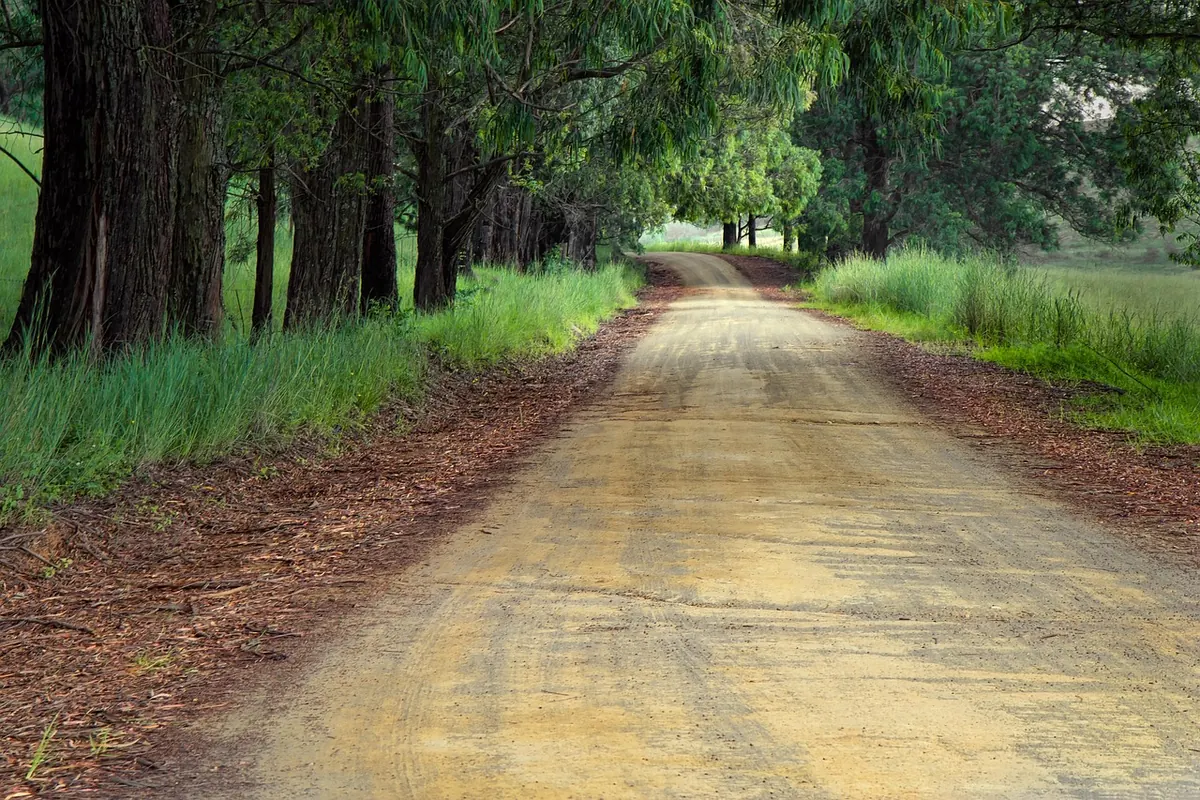
The best weekend routes are not the ones with the most famous names. They are the ones where you can drive for twenty minutes without seeing a single traffic light, where the hedgerows brush the sides of the car, and where the only decision is whether to stop at the next village or the one after. Motorways are built to erase the landscape. Quiet roads are built to reveal it. So on Friday evening, open the map, turn off the fastest route, and draw a line through the places you have been meaning to see. Then leave early, stop often, and come home the long way. The trip will take longer, but it will be the part you talk about on Monday.
Photo: stevepb / Pixabay